

The overlooked side of sun exposure
Hair is exposed to sunlight every day, yet UV-related fibre damage receives far less attention than skin photodamage. Because the emerged hair shaft is non-living, it cannot biologically repair itself. Repeated exposure can therefore accumulate as colour change, reduced strength, roughness and poor manageability.
This is especially relevant in high-sunlight regions such as Southern Africa, and for hair that is coloured, bleached, relaxed, heat-styled or already porous. The formulation opportunity is to protect the fibre before damage accumulates, while supporting repair and condition where weathering has already occurred.

What UV exposure does to hair
Hair is composed mainly of keratin proteins, with melanin pigments and a small but important lipid fraction. Sunlight can affect all three:
Surface lipids: the 18-MEA-rich outer lipid environment supports hydrophobicity, low friction and shine. Photo-oxidation, especially alongside bleaching or alkaline processing, can leave hair rougher, more wettable and harder to comb.
Protein integrity: UVB is strongly associated with protein loss. Oxidation of amino-acid residues can contribute to brittleness, reduced elasticity and breakage. Tryptophan loss is commonly used as a marker of hair photodamage.
Pigment and colour: UVA is strongly associated with colour change. Melanin and artificial colourants can oxidise, leading to fading or tonal shifts, particularly in dyed and porous hair.
What consumers are likely to notice
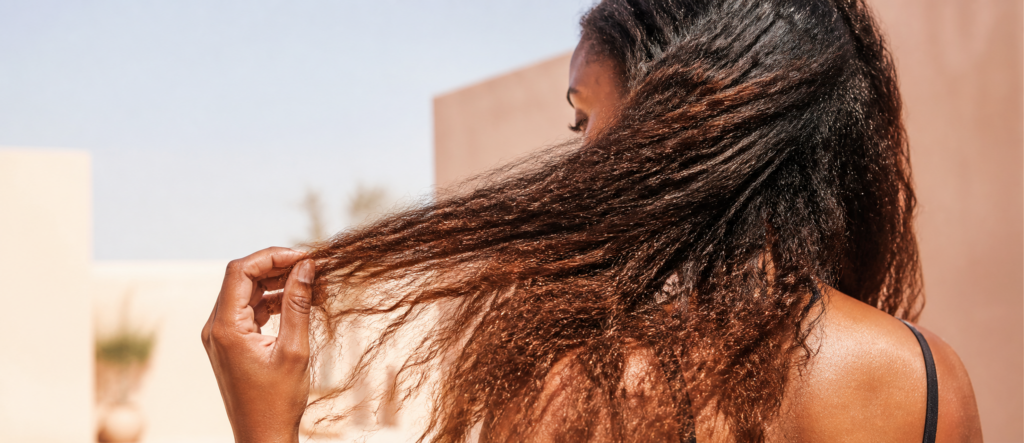
The molecular changes are complex, but the visible signs are familiar: dullness, fading, roughness, frizz, tangling, dryness, split ends and breakage. These symptoms are often blamed only on heat or chemical treatments; in practice, sunlight can compound those stressors.
A layered formulation strategy
No single ingredient addresses every damage pathway. A credible environmental hair-care system combines complementary mechanisms and validates them in the finished product.
1. Protect against the wider exposome
ZinBloq combines upcycled ginger-root extract for antioxidant activity, marine extract as a coating agent, and algin for coating and chelating support against metals and pollutants. This positions it as the perfect ingredient for exposome protection, because it protects the hair cuticle, preserves the cortex, increases hair gloss, maintains lipid surface integrity, and detangles hair. Ormagel XPU, a natural, marine-derived active, reacts with hair proteins and reduces cysteine degradation caused by UV-induced oxidation.
2. Support antioxidant defence
Phyto.Care AOX is a vegan, preservative-free blend of vegetable bioesters and botanical antioxidants positioned against environmental ageing and oxidative stress in hair and scalp. It protects the scalp from DNA damage and the disulphide bonds in the hair strands against UV damage.
3. Restore lipids and reinforce the fibre
Epinutrix, a biomimetic lipid (a blend that mimics natural skin oils), is positioned for lipid repair, hydrophobicity, and conditioning. It provides hair repair and replenishment without build-up, seals split ends, improves hair combability and appearance. It also protects the scalp against aggressors and stimulates the formation of a new lipid barrier. Oat-derived Glucaveen seals in moisture to the hair for a long-lasting burst of hydration. With its unique molecular profile of beta-glucan, starch, and amino acids, it also protects and repairs damaged strands.
4. Improve deposition and coverage
Hair charge, ingredient polarity, molecular size, and ingredient format all influence deposition of the actives on the hair. Film-forming and conditioning systems can improve coverage and persistence. For damaged hair, Filcortex Veg, a blend of proteins and marine extracts, seals the amino acids into the hair fiber, increasing hair mass and reinforcing its structure. It replaces lost proteins of the hair cortex, repairs brittle and damaged hair, and acts as a thermal protector. Tamariliz, a tamarind fruit extract rich in sugars and organic acids, adds antioxidant support alongside fibre cohesion, cuticle smoothing, shine, and frizz-control benefits.
Choosing the right format
The product format affects contact time, deposition, and consumer compliance. A rinse-off conditioner can improve fibre condition, while a well-designed leave-on format generally offers more opportunity for persistent coverage. Relevant concepts include a daily environmental-defence mist, leave-in cream for porous or textured hair, protective serum for lengths and ends, or colour-care conditioner combining repair, lipid support and colour retention.
Any UV filter proposed for hair use must be permitted for the intended market and product type, compatible with the formulation and photostable in the system. Formulators should avoid borrowing skin-sunscreen terms such as SPF for hair unless the claim is supported by an appropriate recognised method and regulatory review.
Testing turns a concept into a credible claim
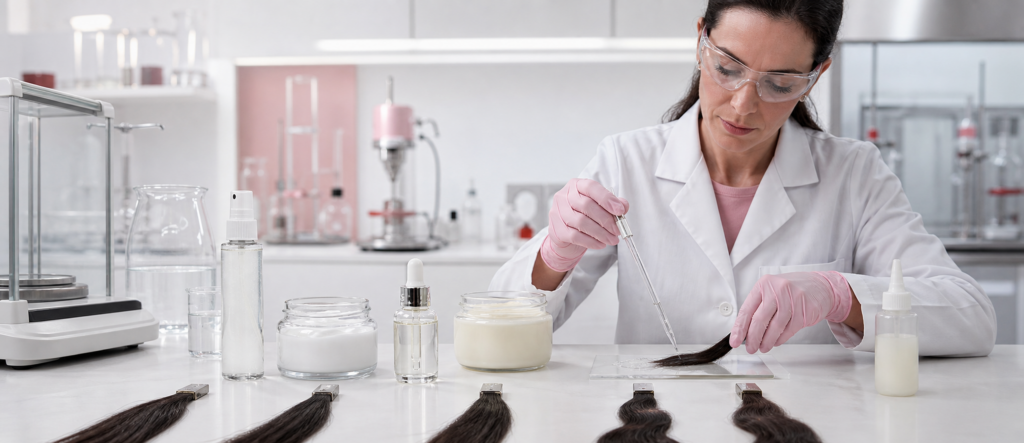
Ingredient selection is the starting point, not the evidence. Testing should compare untreated hair, the vehicle and the active system under a defined irradiation protocol. Depending on the claim, useful endpoints include protein-oxidation markers, CIELAB colour change, tensile strength, wet and dry combing force, surface friction, contact angle, lipid analysis and microscopy of cuticle condition.
Claims should match the measured endpoint. For example, “helps reduce colour fade under the tested conditions” is more supportable than an unqualified “UV protection” statement.
Ingredient shortlist
| INGREDIENT | SUPPLIER | RELEVANT ROLE |
| ZinBloq | Assessa | Exposome defence: antioxidant, coating and chelating mechanisms. |
| Phyto.Care AOX | AQIA | Hair and scalp protection against oxidative and environmental stress. |
| Tamariliz | AQIA | Antioxidant support, film formation and fibre cohesion. |
| Glucaveen | Oat Cosmetics | Beta-glucans protect and repair hair strands |
| Epinutrix | AQIA | Biomimetic lipid repair and hydrophobicity support. |
| Filcortex Veg | Assessa | Cortex reinforcement and damaged-hair repair. |
| Ormagel XPU | Assessa | Protects the hair from UV-induced cysteine degradation |
Conclusion
UV exposure is a meaningful contributor to cumulative hair weathering. It can affect proteins, pigments and surface lipids, producing the dullness, fading, roughness and breakage consumers recognise. The strongest formulation response is layered: manage oxidative stress, support the lipid environment, improve deposition, reinforce damaged fibre and validate the final product under relevant conditions.
Cosmetic Ingredients supplies speciality hair and scalp ingredients and supports customers with technical information, guideline formulations and practical input through its applications laboratory. Contact us to discuss options for your next environmental-defence, colour-care or repair-focused formulation.
Explore the Cosmetic Ingredients hair and scalp care range and discover ingredients for your next hair product: https://cosmetic-ingredients.co.za/hair-and-scalp/
Sources and further reading
- Robbins, C.R. (2004). Review of the effect of ultraviolet and visible radiation on hair structure and options for photoprotection. PubMed PMID: 15037923.
- Dario, M.F. et al. UV filters for hair protection. PubMed PMID: 19272124.
- Cosmetic Ingredients: Hair and Scalp portfolio and product pages – cosmetic-ingredients.co.za.
- Assessa: ZinBloq exposome hair protection and technical bulletin – assessa.com.br/zinbloq-en/.